
In industrial machinery installation and load-bearing structural design, a steel machine base plate (or sole plate) is a critical component that distributes loads onto the foundation, reduces vibration during operation, and prevents localized settlement.
However, a common challenge that purchasing departments and factory engineers often face is having to buy full-sized standard steel plates (such as 4×8 ft or 5×10 ft) to cut down in-house. This creates hidden cost burdens, including scrap waste, cutting labor costs, wasted time, as well as issues with out-of-square cut edges.
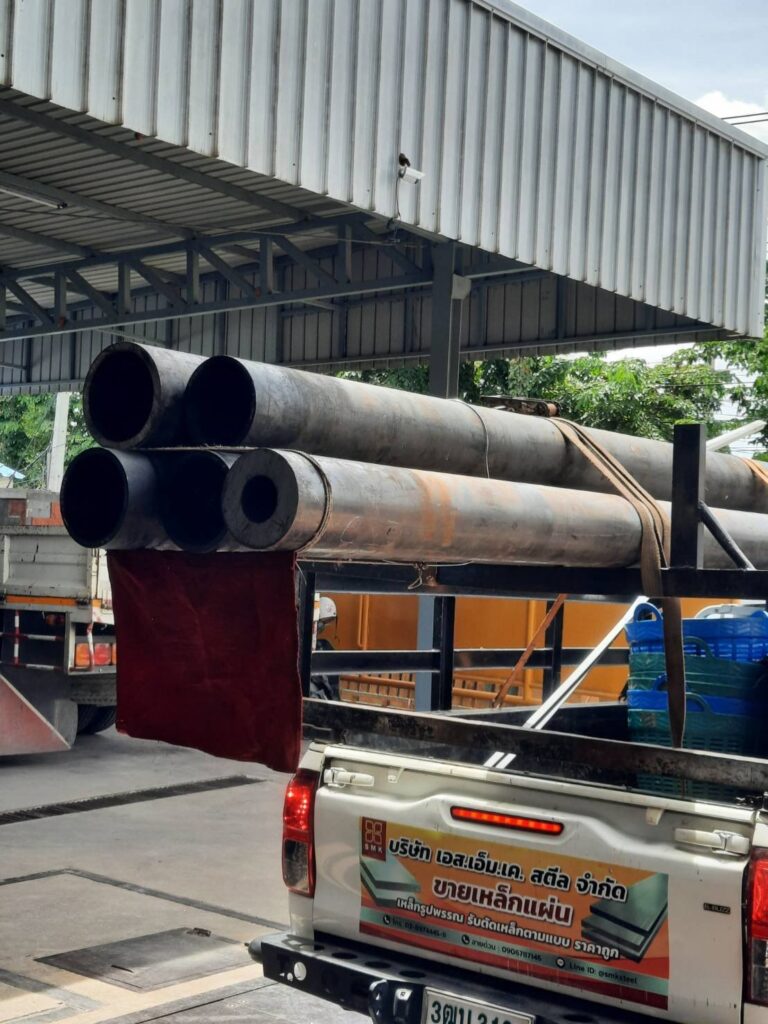
Utilizing cut-to-size steel plate services, such as SMK Steel’s recent delivery of SS400 grade steel (35 mm thick x 200 mm wide x 200 mm long), provides a solution that allows factories to precisely control procurement budgets and assemble components more rapidly.
Why is 35 mm thick SS400 steel preferred for machine base plates?
SS400 grade steel (per JIS G3101 standards) is the most popular low-carbon structural steel for structural engineering and machine foundations. When cut into 200×200 mm base plates at a thickness of 35 mm, it offers three key technical advantages:
1. Compression resistance and prevention of machine base deflection
Industrial machinery often has high total weight and generates constant vibration during operation. Selecting a 35 mm thickness increases the moment of inertia and bending resistance, ensuring the base plate does not deflect when anchor bolts are tightened, thereby maintaining constant machine alignment.
2. Ease of on-site welding, reducing the risk of cracking
With a lower carbon content than medium-carbon steels (such as S50C), SS400 steel possesses excellent weldability. Installers can weld base plates to H-beams, channels, or structural columns immediately without the need for complex pre-heating, reducing the risk of cracks in the heat-affected zone (HAZ).
3. Convenient for subsequent drilling and surface facing
After receiving the cut-to-size pieces, if the site requires drilling for anchor bolts or surface facing to adjust levels, SS400 steel is easy to machine, minimizing wear on drill bits and CNC inserts, which saves time in pre-installation preparation.
Gas cutting techniques and machining allowances for engineers
For processing steel plates 25 mm thick and above, including 35 mm specifications, the oxy-fuel gas cutting process is the industry standard, providing the most precise cuts and cost-effectiveness.
To ensure components align with drawings and reduce on-site issues, engineering and procurement teams should consider size allowances based on subsequent applications as follows:
- For As-Cut Applications (No Additional Edge Milling Required): If the plates are used as machinery base plates, column cap plates, or general structural mounting bases where structural strength is the primary requirement, you can order them cut to your exact finished dimensions (for example, 200 x 200 mm) and proceed directly with drilling or welding upon delivery.
- For Further Milling/Lathe/CNC Machining (Machining Allowance): Because the heat from the oxy-fuel cutting torch creates a hardened heat-affected zone (HAZ) approximately 1–2 mm deep along the cut edge, if your drawing specifies tight tolerances or requires a smooth, polished edge finish, we recommend ordering an oversize cutting allowance of 3 – 5 mm per side (for example, ordering 205 x 205 mm or 210 x 210 mm). This allows the machinist to skim and finish the edges to achieve 100% dimensional accuracy and squareness.
Technical Data and Selection Guide Table for SS400 Steel Grade
Summary table of basic properties of SS400 steel plates and SMK Steel’s service scope for specification review and quotation requests:
| Technical Information | SS400 Grade Steel Specifications |
| Reference Industrial Standards | JIS G3101 (Rolled Steels for General Structure) |
| Tensile Strength | 400 – 510 N/mm² (MPa) |
| Yield Strength | Minimum 235 – 245 N/mm² (Depending on plate thickness) |
| Weldability | Excellent; compatible with all structural welding processes. |
| Recommended Industrial Applications | Machine base plates, machine base structures, column head plates, and general jig & fixture work. |
| SMK Steel Cutting Service Scope | Gas cutting services to size (thickness x width x length) and according to drawings (supporting steel plates up to approximately 300 mm thick, depending on grade and stock). |
Frequently Asked Questions (FAQ) About SS400 Cut-to-Size Steel Plate Services
Q1: If I need to order just a few pieces of 35 mm thick SS400 steel plate for maintenance work, does SMK Steel accept such orders?A: Yes, we do. Whether it is an urgent maintenance job requiring only a few pieces or a bulk order for a new machinery installation project, you can provide the dimensions (Thickness x Width x Length) and required quantity to our sales team for an immediate quotation—no need to purchase a full-sized plate.
Q2: Besides squares or rectangles, can I order oxy-fuel gas cutting in other shapes according to a drawing?A: Yes, you can. SMK Steel offers custom oxy-fuel gas cutting services based on customer drawings (we accept CAD files, PDFs, or sketches with clear dimensions), such as circles, flange rings, or complex mechanical parts, to help reduce preliminary processing steps at your factory.
Q3: If our project requires steel with higher strength than SS400 for machine parts or molds, do you offer other grades?A: Yes, we do. In addition to SS400, we stock engineering and tool steel plates and heavy plates covering grades such as S50C (medium carbon steel for high-strength mechanical parts), SKD11 (cold work tool steel for blanking/stamping dies), and P20 (plastic mold steel and mold bases), with thicknesses up to approximately 300 mm, depending on the grade and current stock availability.